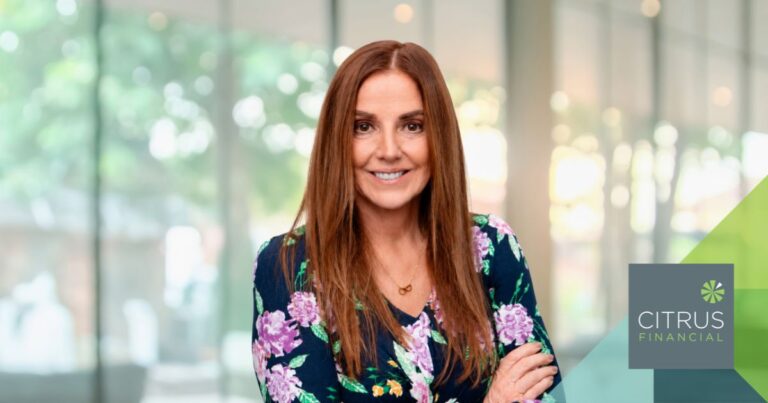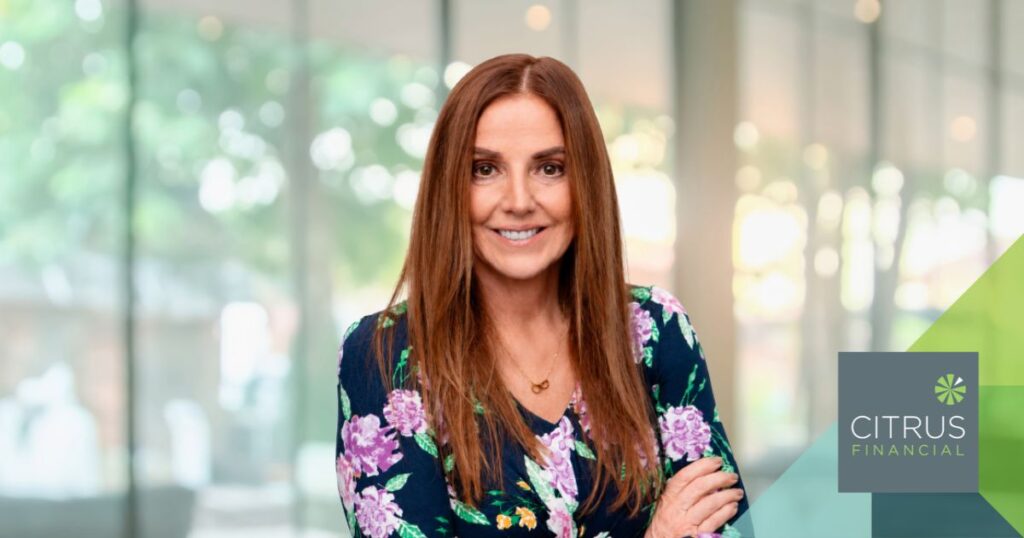
From Army medic to Chartered Financial Planner, Patricia “Trish” Harris has taken anything but a conventional route into financial services. Having served in both the Army and Territorial Army, including roles as a medic, dog handler and radio operator, Trish found herself embarking on an unexpected career in financial services while living in Germany. Fast forward 36 years, and her determination, natural curiosity and passion for helping others have seen her become a Chartered Financial Planner, a Fellow of the Personal Finance Society, Citrus Financial’s Senior Paraplanner and a national finalist at the Women in Financial Advice Awards.
Her journey is one of hard work, continuous learning and a belief that good financial advice should always begin with understanding the person behind the numbers. Away from work, she’s equally at home on a mountain bike, supporting her beloved Watford or enjoying live music.
We sat down with Trish to discover more about the woman behind the qualifications, the experiences that have shaped her and what continues to inspire her after 36 years in the profession.
You’ve worked in financial services for 36 years. How did you first get into the profession?
I always say I fell into financial services. I’d been a medic in the Army and left while I was still living in Germany. I didn’t speak German at the time, so my job options were fairly limited and I was actually due to start work as a cleaner on the Monday.
Then I saw an advert for a company called Fennell’s Financial Services looking for a client liaison officer. I phoned them, was interviewed that same day and they offered me the job there and then. So instead of starting as a cleaner on Monday, I started in financial services!
Initially I dealt with things like kit insurance claims and made appointments for the advisers. After a couple of years I moved into advising myself, initially working with soldiers and their families. Before deployments, I would sometimes find myself standing in front of hundreds of soldiers talking about things like life cover and making sure their families were financially protected.
You’ve worked as both an adviser and a paraplanner. How did your career evolve between the two roles?
It was quite a natural progression really. I advised for many years, but when my daughter was young the lifestyle became difficult. Advisers need to be available to clients and that can mean evenings and weekends, and at that stage of my life it simply wasn’t working for me.
So, I moved back towards paraplanning and decided to concentrate on developing my technical knowledge and taking more professional exams. I don’t really feel that I left the advice process behind. I’ve simply moved to a different side of it.
What did working directly with clients as an adviser teach you that still helps you today?
It means I understand both sides of the process. As a paraplanner, you can do the research and produce the information an adviser needs, but having been an adviser myself I also know what it’s like to sit in front of a client and explain a recommendation.
I understand what information the adviser needs, the questions a client might ask and where something complicated may need to be explained more clearly.
That experience helps me look at a case not just from a technical point of view, but from the perspective of how the advice is eventually going to work for the client.
“I don’t really feel that I left the advice process behind. I’ve simply moved to a different side of it.”
Financial services has changed enormously during your career. What are the biggest changes you’ve seen?
The level of regulation and professionalism has changed enormously. When I first became an adviser, you could qualify through experience without having to sit the kind of professional exams advisers take today.
Over the years we’ve seen formal qualifications introduced, much more detailed assessment of things such as attitude to risk and far greater scrutiny around why a recommendation is suitable for a particular client. That has been a huge change during my career.
The profession also never stands still. There are always new rules, legislation and products to understand, which is one of the things that keeps it interesting.
How did you come to join Citrus in 2021?
It was quite unconventional! The firm I was working with had been sold and a business consultant who knew my work put me in touch with Citrus.
I originally came on board on a self-employed basis for three days a week. It quickly became obvious there was plenty for me to do here, so three days became five and I joined Citrus permanently a few months later.
Because it was during Covid, I’d actually started working with Citrus before I’d met some of the leadership team in person, which seems very strange looking back now.
For anyone who doesn’t really know what a paraplanner does, how would you explain your role?
A lot of what a paraplanner does happens behind the scenes. We carry out the research and analysis that sits behind the advice. Depending on the case, that could mean looking at a client’s existing arrangements, researching products or investments, comparing different options and helping the adviser build the recommendation.
Ultimately, it’s about making sure the adviser has everything they need to sit down with a client and explain why a particular course of action is suitable for them.
How does your experience as a former adviser help you when you’re working with the advisers at Citrus?
Because I’ve done the job myself, I understand what the adviser is trying to achieve. Sometimes an adviser will come to me with a client’s circumstances and simply say, “What can we do here?” rather than starting with a particular solution in mind.
That’s where working together is really valuable. We can look at the client’s position, explore the different options and work out what makes sense.
And sometimes the right answer is to do nothing at all.
Clients often find that really reassuring. If what they already have is working well for them, good advice shouldn’t be about finding a reason to change it.
“Sometimes the right answer is to do nothing at all. If what a client already has is working well for them, good advice shouldn’t be about finding a reason to change it.”
What does a really good adviser and paraplanner relationship look like?
Trust, communication and mutual respect. It isn’t simply about passing work backwards and forwards. You need to understand what the adviser is trying to achieve for the client, have clear communication and be able to discuss ideas or concerns openly.
A good relationship also means being able to challenge each other constructively. Ultimately, everyone is working towards the same thing: getting the right outcome for the client.
You specialise particularly in pensions and investments. What is it about those areas that you enjoy?
I think it’s partly something that has happened naturally over the years. Pensions can be extremely complicated and there is a huge amount of legislation around them. As you build experience and knowledge in an area like that, it makes sense to keep developing it rather than trying to specialise in everything.
I’ve accumulated a lot of experience with pensions and investments over the years, so they’ve become the areas I naturally gravitate towards.
They’re also areas that affect so many clients and can make a very real difference to the plans they have for the future.
What’s the most satisfying part of taking something complicated and helping turn it into clear advice?
I enjoy the intellectual challenge of working something out. Sometimes you’re looking at something very technical and the first job is simply understanding exactly what is happening. Then you have to turn that into something which can actually be explained to a client.
I’ve always liked using diagrams for that reason. You can explain something technically for ten minutes, or sometimes you can draw two pots on a piece of paper and suddenly somebody can see exactly what you mean.
For me, good financial advice shouldn’t just be technically correct. The client needs to understand it too.
“For me, good financial advice shouldn’t just be technically correct. The client needs to understand it too.”
You’re a Chartered Financial Planner and a Fellow of the Personal Finance Society. What did achieving those qualifications mean to you?
I’ve always believed professional qualifications would become increasingly important in financial advice, and I wanted to keep pushing myself.
One of the advanced exams came about almost as a challenge. My boss at the time was planning to sit it and I said I’d do it with him. We never actually got around to studying together, but we both booked the exam.
Mine happened to fall on the morning I was flying to Mauritius for my 50th birthday, so I turned up at the exam centre with my suitcase, sat a three-hour written exam and then went straight to the airport.
I passed and he didn’t!
That gave me the confidence to think, “I might as well keep going while all this is fresh in my mind.” So, I carried on through the advanced qualifications to Chartered and then Fellow.
It was tough, particularly studying alongside work and family life, but I was determined to do it. Looking back, I’m incredibly proud that I did.
You were recently shortlisted at the Women in Financial Advice Awards. What did that recognition mean to you?
It meant a huge amount. It was national recognition from people within the profession, and that made it particularly special.
My career hasn’t followed a traditional route. I didn’t leave school, go to university and start on a graduate career path. I started in the Army, fell into financial services almost by accident and built my career from there.
To have a panel of judges look at that career and recognise what I’ve achieved was a really proud moment. Of course I would have loved to win, but being shortlisted nationally was a fantastic achievement. There’s always next year!
After 36 years in financial services, what still keeps the job interesting?
Every client is different. They have different circumstances, different priorities and different problems to solve. At the same time, financial services never stands still. There are always new rules, products and challenges, so you’re continually learning.
But the thing that probably means the most is knowing you’ve genuinely helped somebody.
I’ve had former clients track me down years later simply to say thank you for advice I gave them. One recently contacted me after around ten years just to tell me how much the planning we’d done had helped him. When somebody makes the effort to find you years later just to say thank you, that means a lot.
Away from work, you’re a keen mountain biker. How did you get into it?
It really started when I lived in Germany. There were huge military training areas and, when they weren’t being used, I loved getting out on my bike. I’d sometimes get dropped off miles from home and just find my own way back.
I look back now and think I must have been mad because there was no map or satnav involved. I’d just follow my nose!
There were abandoned villages, churches and old buildings within some of the training areas, so there was always something interesting to discover.
I still enjoy cycling now, both outdoors and on the Peloton.
You also enjoy live music. What sort of bands do you like seeing?
I really enjoy local live music. My best friend’s boyfriend is the lead singer in a local rock band called DeLorean, so we go and see them quite a lot. Another favourite is The Informers, who play a lot of ska and Elvis Costello-type music.
There are several small live music venues near us, which is brilliant. If we’re talking about bigger artists, though, Mary J. Blige would be hard to beat. I’ve followed her since her first album and I’ve now seen her live twice.
When you’re not working, mountain biking or at a gig, what does a perfect weekend look like?
Winning football! I’m a lifelong Watford supporter and a season ticket holder. We go to away games too, so a Watford win on Saturday followed by a nice roast on Sunday sounds pretty close to a perfect weekend to me.
Quickfire Round
Tea or coffee?
Tea.
Early bird or night owl?
Early bird.
City break or beach holiday?
Beach, although I do like exploring new places.
Favourite place you’ve ever visited?
Maldives.
Best live act you’ve seen?
Mary J. Blige.
A song you never get tired of?
Bohemian Rhapsody. I’ve even got some of the lyrics displayed in my kitchen.
Best piece of advice you’ve ever been given?
Never judge. My mum never judged anybody, and that’s something that has always stayed with me.
You can meet more members of the team here.
Approver Quilter Financial Services Limited. 26/07/2026