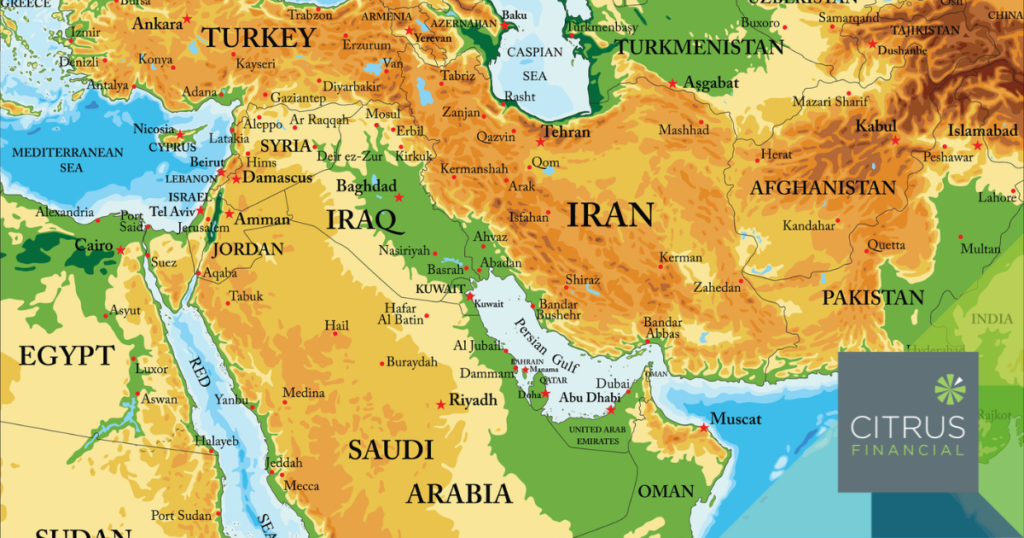
Global markets have reacted this week as the conflict in the Middle East continues to intensify.
Geopolitical events like this can create uncertainty for investors, particularly when markets move quickly and headlines feel unsettling. While the situation is still evolving, it can help to step back and focus on the broader investment principles that tend to matter most.
Lindsay James, Investment Strategist at Quilter and a regular guest on Citrus Insights, commented this week on how the situation is affecting markets.
Market commentary from Lindsay James, Quilter
“The Iranian conflict has entered its fourth day and is showing no signs of de-escalation, rocking markets in the meantime. Any ceasefire for now looks like a remote possibility as Iran appears content with damaging Western interests in the Middle East by targeting other Arab states that house US military bases. As a result, investors should be prepared for an extended period where global markets are buffeted and states take extraordinary actions to protect their own interests, such as Qatar shutting off its gas production.
“The worrying element is this conflict has the potential to escalate further, damaging global trade and making the shipment of goods and commodities more difficult. Shipping companies already seem to be pre-empting that potential threat by diverting round Africa as a result so cost inflation will start to kick in on all imported goods to Europe from Asia in days to come. This is primarily what is driving markets lower today as the threat of a protracted conflict becomes more realistic by the day and the US continues to evolve its objectives following the first few days of bombings. For now, no regime change looks likely.
“With many equity markets having achieved all-time highs in recent weeks and valuations more stretched in the US, investors need to make sure their portfolios are prioritising diversification. It remains the best strategy to dampen any global shocks to markets. Equities initially shrugged following the commencement of US-Israeli action, but as the consequences become clear they do not like what they see and thus having an appropriate mix of assets and regions helps to protect portfolios. Oil prices also continue to rise and if these are sustained then inflation spikes become a real possibility and the path for interest rates gets thrown into question.
“Wars continue to have little impact over long-term asset returns, with recent history a good reminder that sell-offs can reverse very quickly. However, in the short-term it can be an uncomfortable ride as the path for inflation and interest rates becomes challenged. The dollar is regaining its safe haven status following a rocky 12 months, while energy assets and defence companies may be the beneficiaries for now. With visibility on what happens next at best a calculated guess, and given where market valuations are at the moment, adding ballast would be a sensible move.”
What investors can take from this
While geopolitical events can cause market volatility in the short term, history suggests they rarely change the long-term trajectory of global markets.
Moments like this often reinforce one of the most important principles of investing: diversification.
A portfolio that spreads investments across different regions, industries and asset types can help reduce the impact of unexpected global shocks.
Periods of uncertainty can be uncomfortable, but they are also a reminder that successful investing usually comes from maintaining a long-term perspective rather than reacting to short-term headlines.

About the author: David Braithwaite is a highly regarded financial expert, known to many as BBC Radio Kent’s “Money Mentor,” where he shares practical advice and insights on managing money effectively. As the founder of Citrus Financial, David has built a reputation for providing tailored financial guidance to individuals and families, helping them achieve their financial goals with confidence.